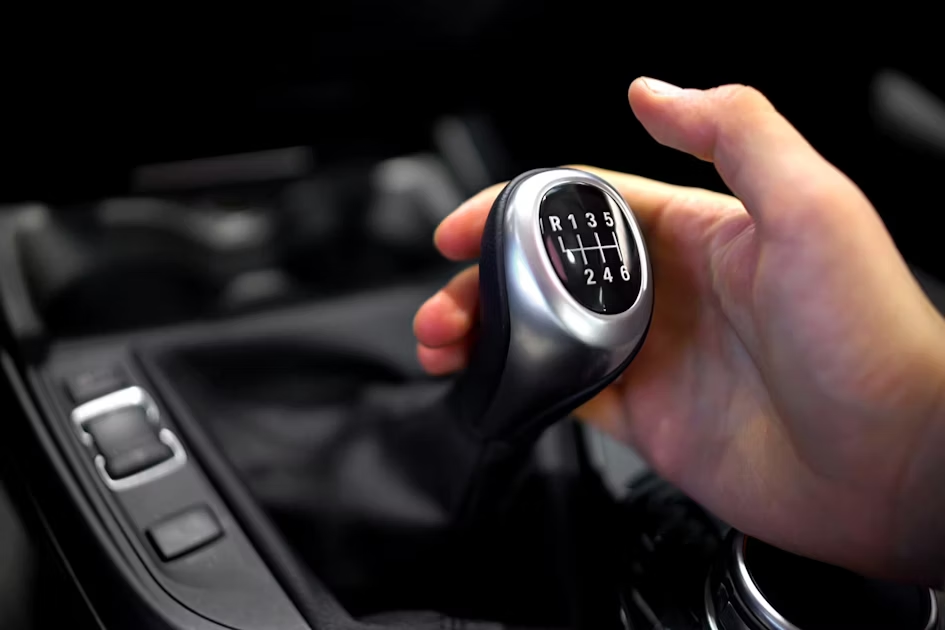
The future of manual transmission cars in 2025 is a subject of increasing discussion as manufacturers shift towards more advanced transmission systems, particularly automatic and semi-automatic gearboxes. Although manual transmissions are gradually becoming a rarity in the modern car market, they are still cherished by driving enthusiasts for the unique driving experience they offer. Here’s an in-depth look at the state of manual transmissions and a comparison to automatic transmissions.
Declining Popularity of Manual Transmissions
In 2025, the availability of manual transmissions in new cars is rapidly decreasing, with fewer than 30 models offering them. The global trend is moving toward automatic and continuously variable transmissions (CVTs), which have advantages in terms of fuel efficiency, performance, and ease of use, especially for everyday driving.
Key reasons for the decline of manual transmissions include:
- Consumer Preferences: The vast majority of consumers prefer automatic transmissions for the convenience they offer, especially in urban environments with heavy traffic.
- Fuel Efficiency and Emissions: Automatics, particularly CVTs, are better at optimizing engine performance for fuel efficiency and reducing emissions, a crucial consideration in today’s increasingly eco-conscious automotive market.
- Technological Advancements: Automatics and dual-clutch transmissions (DCTs) provide faster, smoother shifts that enhance driving experience and overall performance, making them more appealing to a broader audience.
Manual Transmission: The Enthusiast’s Choice
Despite these trends, manual transmissions continue to have a strong presence in select models aimed at driving enthusiasts. Cars like the BMW M2, Ford Mustang, and Subaru WRX still offer a manual option for those who seek the tactile engagement and control that only a manual transmission provides.
Advantages of Manual Transmissions:
- Driver Engagement: A manual transmission offers a level of engagement and connection with the car that automatic transmissions simply can’t match. Gear shifting becomes an active process, requiring skill and attention, which many driving purists find rewarding.
- Cost-Effective: Manual transmissions are often cheaper to produce, resulting in lower base prices for some models. They also tend to be less expensive to maintain due to their simpler mechanical design.
- Control Over Performance: Manuals offer direct control over engine power and acceleration. Enthusiasts enjoy the ability to control when and how to shift gears for an optimal driving experience, particularly in sports cars.
Challenges of Manual Transmissions:
- Convenience: Manual transmissions require constant attention to shifting gears, which can be tiring and cumbersome, especially in stop-and-go traffic.
- Limited Availability: Many mainstream automakers have phased out manual transmissions in favor of automatics, which limits options for those seeking a manual driving experience.
- Learning Curve: Learning to drive a car with a manual transmission requires additional skills, which can be intimidating for new drivers.
Automatic Transmission: The Dominant Choice
Automatic transmissions have become the preferred choice for most modern drivers, offering convenience, speed, and fuel efficiency. In 2025, automatics are expected to dominate the market, with many cars offering dual-clutch transmissions (DCTs) or CVTs, which are designed to provide the best of both worlds—smooth shifts with enhanced fuel economy.
Advantages of Automatic Transmissions:
- Ease of Use: Automatic transmissions are simpler to operate, especially in congested traffic, where shifting gears frequently can be a hassle. The car does the work for you, making them more user-friendly, especially for newer drivers.
- Fuel Efficiency: Modern automatics, particularly CVTs and DCTs, are optimized for fuel efficiency and improved mileage. They adjust the engine’s output for maximum efficiency and smooth acceleration, reducing fuel consumption and emissions.
- Improved Performance: Advanced automatic systems can shift faster and more precisely than human drivers with a manual transmission, especially in performance-oriented vehicles. DCTs, in particular, offer rapid gear shifts that enhance acceleration without sacrificing power delivery.
Challenges of Automatic Transmissions:
- Less Driver Engagement: For driving purists, automatics can feel disengaging, as they remove the element of control over gear shifting. The experience of driving a car with a manual transmission can feel more connected and dynamic, especially for those who enjoy precision handling.
- Cost of Maintenance: Although automatics are increasingly reliable, they can be more expensive to maintain and repair due to their complex components and systems.
- Potential for Over-Reliance on Technology: As more cars rely on automatic systems, some enthusiasts feel that driving becomes more about convenience and less about skill and involvement in the driving process.
Manual vs. Automatic in 2025: A Comparison
| Feature | Manual Transmission | Automatic Transmission |
|---|
| Driver Engagement | High: Requires active involvement and skill | Low to Medium: Less interaction, more convenience |
| Fuel Efficiency | Lower than automatics, but not significant | Higher efficiency, especially with CVTs and DCTs |
| Ease of Use | Requires constant shifting, tiring in traffic | Effortless shifting, ideal for stop-and-go driving |
| Performance | Direct control over power and acceleration | Smoother shifts, faster acceleration (DCT) |
| Availability | Limited to a few models, mainly performance-oriented | Standard in most vehicles, especially mainstream ones |
| Cost | Lower purchase and maintenance cost | Generally higher due to complexity |
| Learning Curve | Requires skill and practice | Easier to learn, especially for new drivers |
The Future of Manual Transmissions
As the automotive industry continues to evolve, manual transmissions are expected to remain available mainly in high-performance cars or specialty models aimed at enthusiasts. However, as electric vehicles (EVs) become more widespread, the need for traditional transmissions will diminish altogether. EVs don’t require gearboxes because their electric motors can provide consistent torque across a wide range of speeds.
Conclusion:
While manual transmissions still hold a special place in the hearts of driving enthusiasts, their future in mainstream vehicles looks limited. The rise of automatics, coupled with the increasing prevalence of electric vehicles, points toward the gradual phase-out of manual transmissions. For those who value driving as an art form, the option to experience a manual gearbox may become more niche, but it will likely endure in select performance cars. In contrast, automatic transmissions will continue to dominate the market, providing ease of use, efficiency, and superior driving performance for the majority of drivers in 2025 and beyond.